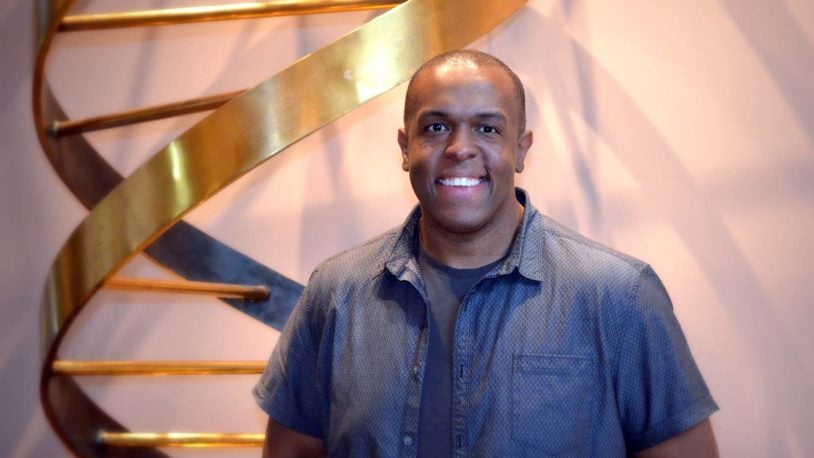
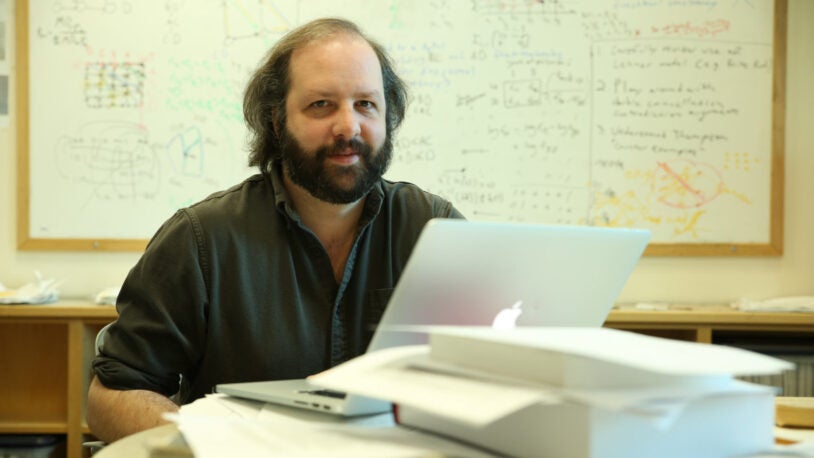
Pollen is not the only thing spreading around the north shore of Long Island this spring. Science is too, courtesy of a trio of researchers from CSHL who infused scientific flavor into two community events this month.
CSHL geneticist Rob Martienssen and neuroscientist Anne Churchland were on hand at Huntington’s Cinema Arts Center recently to offer moviegoers some insights on the science of addiction before settling down for a screening of “Trainspotting,” the classic cult hit about a group of heroin addicts set in Edinburgh in the 1980s.
This science-and-cinema pairing was one of several similar events taking place at theaters around the country as part of a popular program, Science on Screen. (The next event on May 3 pairs a particle physicist from Brookhaven National Laboratory with the time travel movie “12 Monkeys.”) The program aims to provide the “perfect combination of entertainment and enlightenment” by inviting renowned experts from the scientific and medical world to use movies as anchor points to introduce the public to a scientific topic and the latest advances in related research.
Churchland, who studies the neural circuitry of decision-making, took moviegoers on a tour through the brain’s so-called “pleasure circuit,” the network of neurons that ensures that we repeat life-sustaining activities by associating those activities with pleasure and reward.
Most drugs, including heroin—the villain in “Trainspotting”—overstimulate the brain’s reward system by flooding the circuit with dopamine, a chemical neurotransmitter that facilitates communication between neurons. Churchland drew on the movie’s plot to highlight various aspects of drug addiction, such as the mechanistic basis of relapse and the tendency to co-abuse another stimulant, such as alcohol. Read Churchland’s take on the science of Trainspotting here. Continue reading